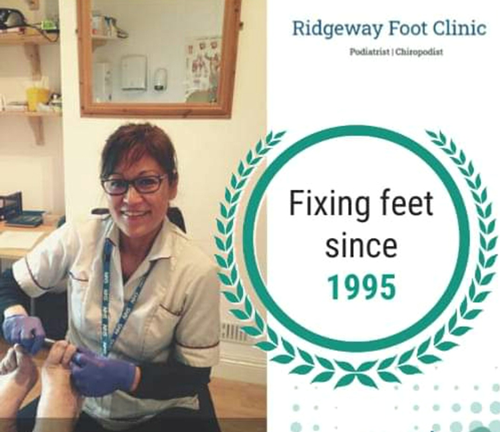

Podiatry or Podiatric Medicine is a branch of medicine devoted to the study, diagnosis and medical and surgical treatment of disorders of the foot, ankle and lower limb. We study a degree at University. Many Podiatrists then choose to specialise in areas such as Musculo skeletal, biomechanics and sports, diabetes, surgery and paediatrics. We are regulated and audited and have to complete annual updates and further education to remain qualified.
Number 157 at the top end of the Ridgeway, next to My Dentist and opposite the Specialised vehicle garage.
Please ring 01752 343477 to enquire or use the contact us page. We have a manned reception and answerphone service. We are usually open 9-4.30 Monday to Thursday.
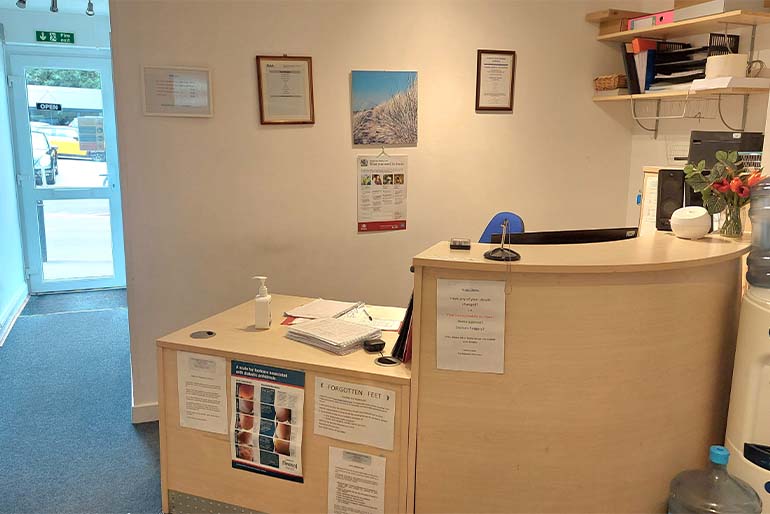
There are several free (3hrs)shoppers car parks in the Ridgeway (don't forget to put your registration in the machine.) Disabled patients are allowed to park right outside the clinic with a badge displayed. There is a ramp and handrail to enter the clinic.
Yes we offer a home visit service, please enquire for details.
First appointment (assessment, history + treatment) allow 45 minutes - £47
Follow up appointment allow 30 minutes - £41
Follow up short appointment (at the Podiatrists discretions for "simple nails") allow 15 minutes - £32
Cryotherapy - £51
Silver nitrate treatment - £46
Verrutop treatment - £56
Verruca Dry needling treatment - from £110
Nail surgery treatment - £350
At your initial appointment, the Podiatrist will take a medical history including any medication you are taking as this may have some relevance relating to your foot health. A detailed history and examination will be taken of your foot problem including any previous therapies or other treatments. A plan of treatment will be discussed, agreed and commenced. Some clients may not need further appointments and some attend regularly. Advice and education is given as required. Referral back to your doctor or another specialist is arranged if necessary.
Here are some examples of the more common foot treatments..
Hard skin can form due to pressure or friction often due to footwear or foot deformity. Long standing callous and corns can be very painful, cause mobility and footwear problems and when combined with conditions such as poor circulation, diabetes and foot deformity can cause ulcers.
There are numerous reasons for foot pain including those mentioned above. Some other examples are plantar fasciitis (arch pain), enthesopathy, ( heel pain ), inflammatory conditions, poor fitting shoes, arthritis , overuse, foot deformity and injury. A full history and examination will be taken before deciding the best plan of treatment.
Nails can become very thick, deformed, painful, ingrown and difficult to cut for a variety of reasons but this is often as a result of trauma over the years and leads to a permanent problem.' Strange looking' nails can also be a sign of underlying disease such as fungal infected nails, Rheumatoid Arthritis and Psoriasis.
Good foot health is massively important for diabetics to prevent ulceration and infection. Diabetic patients are screened annually for circulation and nerve problems and the report sent to the GP. Education as to how to look after the feet at home and what to check for to avoid future problems is very important. Early access to a Podiatrist should problems occur is crucial to prevent serious diabetic foot complications.
Verrucae are actually warts and caused by a virus. The latest research has proved that external treatment of verrucae such as freezing, acids and surgery are unsuccessful as the virus is still present in the body. Eventually the body's own immune system will remove the verruca. For this reason we do not actively treat verrucae. However there are a number of things a Podiatrist can do to help with discomfort such as removal of the hard overlying skin, padding and demonstrating ways to live with a verruca until it disappears naturally!
